Why Sustainable Interior Design Matters More Than Ever
When people search for sustainable interior design articles, they are often trying to understand how interiors can positively impact the environment and daily life. Sustainable interior design is no longer limited to trends or premium projects, it has become a necessity driven by rising energy costs, health concerns, and environmental responsibility.
At North Interior Spaces, one of the leading interior design companies in Pune, we see homeowners, businesses, and students increasingly asking how to make interior design sustainable without compromising aesthetics or comfort. From residential apartments to commercial offices, sustainable interiors are shaping the future of living and working spaces.
This article covers what sustainable interior design is, its benefits, the best materials for sustainable interiors, practical ideas, and real-world examples, making it a complete guide for homeowners, professionals, and aspiring designers.
What Is Sustainable Interior Design?
Simply put, Sustainable interior design creates spaces that are environmentally responsible, healthy for people, and built to last. It focuses on:
- Responsible use of natural resources
- Energy-efficient layouts and systems
- Healthy indoor environments
- Long-lasting and cost-effective materials
Rather than focusing only on furniture or finishes, sustainable design evaluates the entire interior ecosystem, from material sourcing and energy consumption to waste management and maintenance.
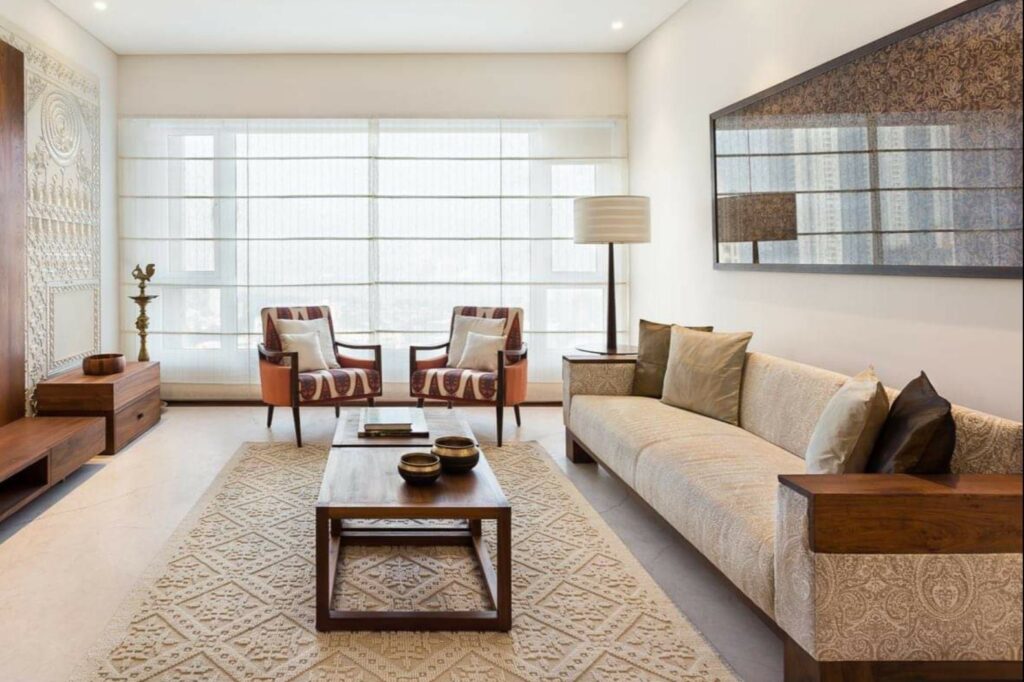
Example: A 2BHK apartment in Pune designed with cross-ventilation, natural lighting, and reflective wall finishes can reduce electricity usage by up to 25–30%, demonstrating how smart interior design choices support sustainability.
Benefits of Sustainable Interior Design
Understanding the benefits of sustainable interior design helps homeowners and businesses make informed decisions.
1. Environmental Benefits
- Reduced carbon footprint through renewable and recycled materials
- Lower waste generation using modular and reusable furniture
- Improved indoor air quality with low-VOC paints and finishes
2. Health & Well-being
- Biophilic elements such as plants, natural light, and organic textures enhance mental health
- Neuroaesthetic research links balanced colors and materials to reduced stress
- Better ventilation reduces allergens and indoor pollutants
3. Financial Benefits
- Lower electricity and water bills due to energy-efficient systems
- Durable sustainable materials reduce replacement and repair costs
- Higher property value, as eco-conscious homes attract modern buyers
Best Materials for Sustainable Interiors
Choosing the best materials for sustainable interiors is the foundation of responsible design.
Eco-Friendly Material Options
- FSC-certified or reclaimed wood
- Engineered wood with low formaldehyde content
- Recycled metal and recycled stone surfaces
- Natural materials such as bamboo, terracotta, and cork
- Low-VOC paints, adhesives, and sealants
- Natural fabrics like cotton, jute, hemp, and linen
These materials are durable, climate-appropriate for Indian conditions, and safer for indoor air quality.
Key Elements That Make Interior Design Sustainable
1. Energy Efficiency
- LED and smart lighting systems.
- Motion sensors to reduce electricity wastage.
- Passive cooling and ventilation design.
2. Water Management
- Greywater recycling for gardening.
- Rainwater harvesting integration.
- Low-flow taps and dual-flush toilets.
3. Waste Reduction
- Modular kitchens and wardrobes that can be reused.
- Upcycled furniture from reclaimed wood.
- Furniture rental/resale economy.
4. Biophilic Design
- Indoor plants that purify air.
- Natural textures like stone, terracotta, bamboo.
- Sunlight-maximized layouts.
Future Trends in Sustainable Interior Design
Circular Economy in Interiors
Furniture and materials designed for reuse, repair, and recycling.
AI and Sustainability
AI tools optimizing layout planning for daylight, airflow, and energy efficiency.
Indoor Farming
Kitchen gardens, vertical green walls, and edible interiors.
Green Certifications
Certifications such as GRIHA, IGBC, LEED, and WELL becoming standard for premium projects in India.
Sustainable Interior Design Ideas for Homes and Offices
If you are exploring sustainable interior design ideas, start with scalable solutions:
For Homes
- Use light-colored walls to enhance natural lighting
- Opt for modular furniture to adapt to future needs
- Add indoor plants for air purification
- Choose natural fabrics for upholstery and curtains
For Offices
- Flexible seating layouts to reduce material consumption
- Acoustic panels made from recycled PET bottles
- Smart energy dashboards to monitor electricity usage
How to Make Interior Design Sustainable
Many homeowners ask how to make interior design sustainable without major renovations.
For Homeowners in Pune & PCMC
- Small steps: Switch to natural fabrics, add indoor plants, replace bulbs with LEDs.
- Medium steps: Choose modular furniture that can be reused if you shift homes.
- Large steps: Integrate solar energy, rainwater harvesting, and energy-efficient appliances.
For Offices & Commercial Spaces
- Acoustic panels made from recycled PET bottles.
- Flexible seating layouts to reduce material usage.
- Smart energy dashboards to monitor consumption.
For Students & Future Designers
- Learn tools like SketchUp with sustainability plugins.
- Explore materials library with eco-certified brands.
- Focus your career pathway on sustainable residential interior design firms.
Challenges & Misconceptions
- “It’s too expensive” → Initial costs may be higher, but ROI is visible in 2–3 years through reduced bills.
- “It only means eco-friendly furniture” → No, it’s about systems: energy, water, waste, and health.
- “Hard to maintain” → Sustainable designs often require less maintenance because they’re durable.
Frequently Asked Questions
Q1. What is the cost difference between traditional and sustainable interiors?
Sustainable interiors usually cost 10–15% more initially but save significantly over time.
Q2. Can sustainable interior design work in Indian weather?
Yes. Materials like terracotta, engineered wood, and recycled stone are ideal for Indian climates.
Q3. Are sustainable interiors suitable for apartments in Pune?
Absolutely. Even small apartments can benefit from energy-efficient layouts and materials.
Q4. Which certifications matter in sustainable interior design?
LEED, GRIHA, IGBC, and WELL are widely recognized.
Conclusion: Designing Spaces That Last
Sustainable interior design is no longer a luxury — it’s becoming the industry standard. Whether you are a homeowner in Pune planning a new apartment, a business looking to create a healthier workplace, or a student exploring your interior design pathway, the future lies in spaces that are beautiful, functional, and eco-friendly.
At North Interior Spaces, we integrate sustainability into modern interior design services across residential and commercial projects in Pune and PCMC.