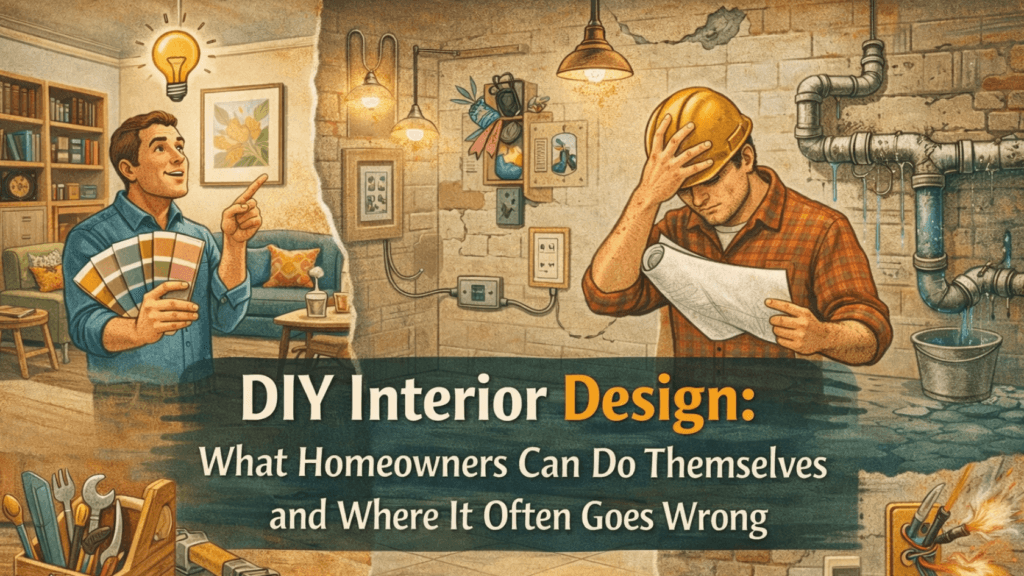
The rise of DIY interior design is not surprising. Today, homeowners have unprecedented access to inspiration, materials, tools, and tutorials. From YouTube walkthroughs to Pinterest moodboards and Instagram reels, interior design do it yourself ideas are everywhere. Add to this a growing interest in hands-on hobbies, tighter budgets, and the reality that many Indians spend more time indoors than ever before, and DIY interiors begin to feel not just appealing, but logical.
But while DIY home interior design can be rewarding, it also comes with invisible risks that are rarely discussed online. Knowing what to take on yourself, and where to pause, is the difference between a home that feels intentional and one that feels exhausting to live in.This article is not an argument against DIY. It’s a guide to doing it intelligently.
Where DIY Interior Design Actually Works
DIY involvement is most effective when it focuses on decision-making, not execution.
Homeowners often underestimate how valuable their own clarity can be. Defining personal taste, lifestyle needs, and long-term expectations is something no external professional can fully do for you.
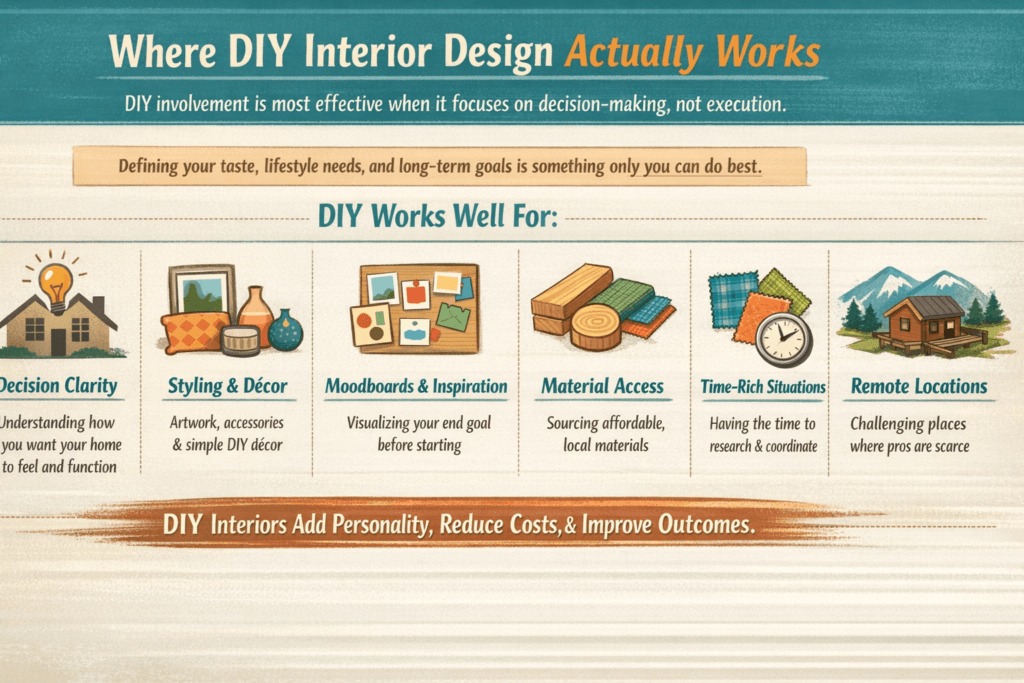
DIY works well for:
- Decision clarity: Understanding how you want your home to feel and function
- Styling and décor: Soft furnishings, artwork, accessories, and even easy crafts to decorate your home that are simple to update
- Moodboards and inspiration curation: Visualising an end goal before work begins
- Material access: Especially when you have trusted retailer contacts or access to local materials
- Time-rich situations: When you genuinely have the bandwidth to research, visit sites, and coordinate
- Remote or obscure locations: Where hiring and managing professionals becomes impractical
In these areas, DIY interiors can add personality, reduce costs, and even improve outcomes.
The Design Decisions That Are Deceptively Complex
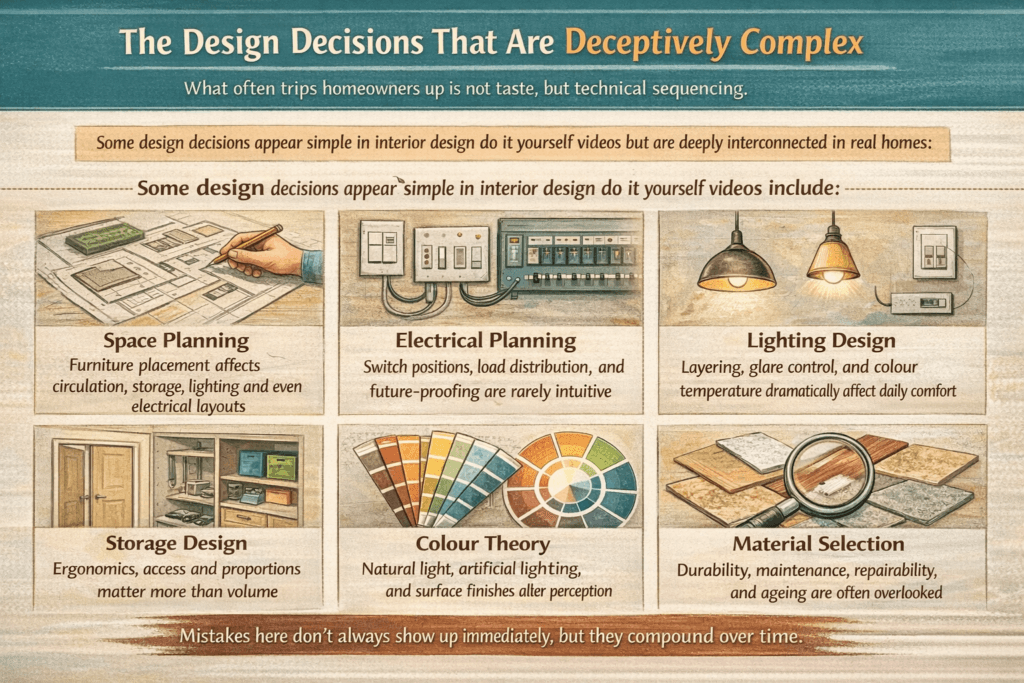
What often trips homeowners up is not taste, but technical sequencing.
Some design decisions appear simple in interior design do it yourself videos but are deeply interconnected in real homes:
- Space planning: Furniture placement affects circulation, storage, lighting, and even electrical layouts
- Electrical planning: Switch positions, load distribution, and future-proofing are rarely intuitive
- Lighting design: Layering, glare control, and colour temperature dramatically affect daily comfort
- Storage design: Ergonomics, access, and proportions matter more than volume
- Colour theory: Natural light, artificial lighting, and surface finishes alter perception
- Material selection: Durability, maintenance, repairability, and ageing are often overlooked
Mistakes here don’t always show up immediately, but they compound over time.
The Most Expensive Mistakes to Reverse
Not all DIY errors are equal. Some are inconvenient; others are structural, costly, and emotionally draining.
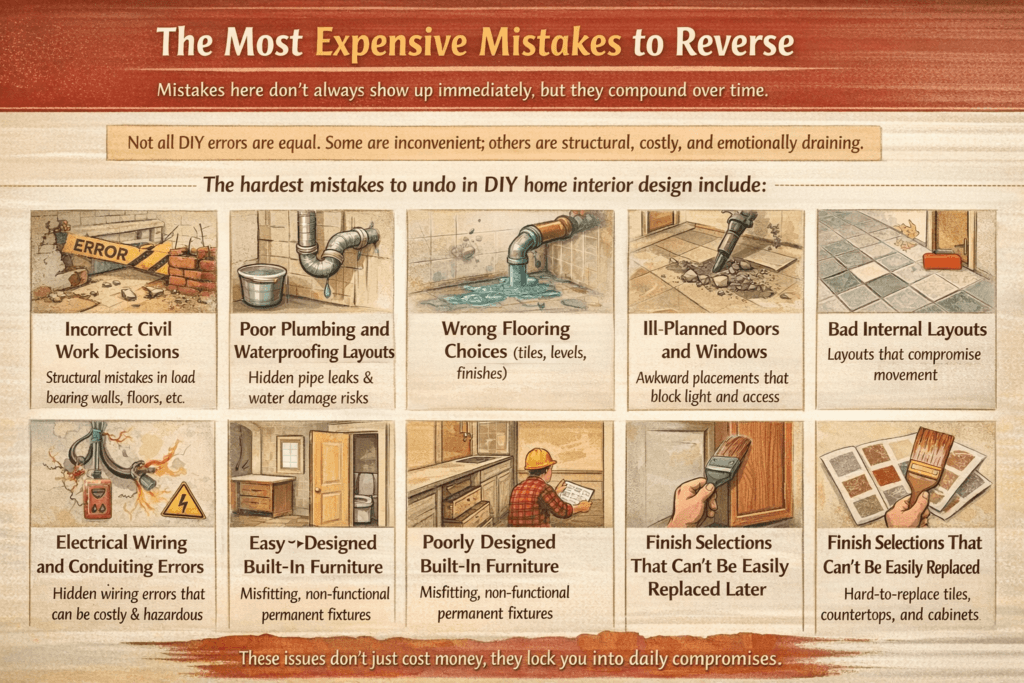
The hardest mistakes to undo in DIY home interior design include:
- Incorrect civil work decisions
- Poor plumbing and waterproofing layouts
- Wrong flooring choices (tiles, levels, finishes)
- Ill-planned doors and windows
- Bad internal layouts that compromise movement
- Electrical wiring and conduiting errors
- Poorly designed built-in furniture
- Finish selections that can’t be easily replaced later
These issues don’t just cost money, they lock you into daily compromises.
A Smarter Way to Prioritise DIY Decisions
One of the most common DIY mistakes is trying to do everything at once. A better approach is sequencing with clarity.
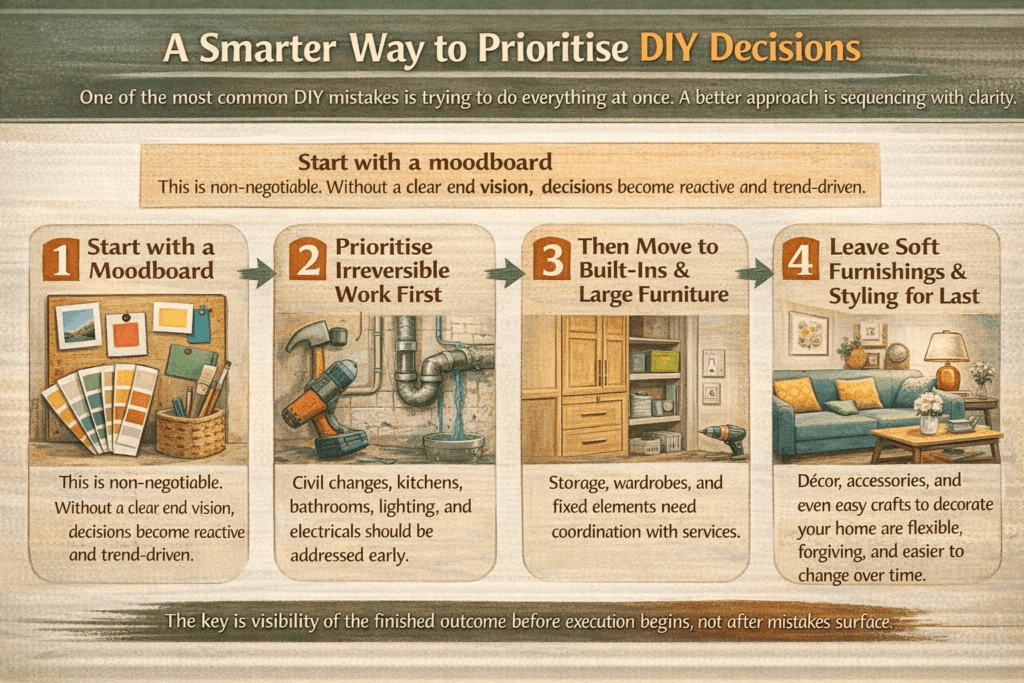
- Start with a moodboard
This is non-negotiable. Without a clear end vision, decisions become reactive and trend-driven. - Prioritise irreversible work first
Civil changes, kitchens, bathrooms, lighting, and electricals should be addressed early. - Then move to built-ins and large furniture
Storage, wardrobes, and fixed elements need coordination with services. - Leave soft furnishings and styling for last
Décor, accessories, and even easy crafts to decorate your home are flexible, forgiving, and easier to change over time.
The key is visibility of the finished outcome before execution begins, not after mistakes surface.
What Professional Interior Designers Think About That Most Homeowners Don’t
Good design isn’t just about aesthetics. It’s about long-term living.
Professionals routinely account for:
- How a space will age over 10–15 years
- Ease of cleaning and maintenance
- Availability of materials for repairs
- After-sales support
- Real usage patterns (not idealised ones)
- Lifestyle shifts over time
- Repair costs and downtime
These considerations rarely appear in DIY tutorials, but they define whether a home feels effortless or frustrating. Many homeowners realise too late that trend-led decisions don’t always age well. A closer look at interior design trends that are already aging poorly shows how popular ideas can quietly work against long-term comfort.
These considerations rarely appear in DIY tutorials, but they define whether a home feels effortless or frustrating to live in. Many homeowners realise too late that trend-led decisions don’t always age well. What looks appealing today can become difficult to maintain, uncomfortable to use, or costly to fix over time.
For homeowners who enjoy DIY but want better direction, learning from real projects and expert opinions can be very helpful. Platforms that share professional insights, such as this interior design guest blog submission, show how designers look beyond trends and focus on comfort, function, and long-term use.
And when DIY decisions start to feel confusing or overwhelming, getting advice from an experienced interior design team can save time, money, and stress. Speaking to a professional interior design company in Pune helps homeowners double-check layouts, materials, and execution plans before small mistakes turn into lasting problems.
The Middle Ground Between DIY and Full-Service Design
DIY doesn’t have to be all-or-nothing.
Many homeowners successfully combine interior design do it yourself efforts with selective professional help, such as:
- One-time design consultations
- Layout or electrical plan reviews
- Phased engagement across rooms
- Styling-only guidance
- Hiring an experienced contractor with design sensibility
- 3D visualisation services for clarity
These options preserve autonomy while reducing costly errors.
Knowing When You’ve Crossed the DIY Limit
DIY stops being empowering when it starts creating stress.
Warning signs include:
- Escalating costs without clear outcomes
- Constant site confusion or mismanagement
- Trend-led choices that don’t work in reality
- Inability to visualise the final space
- Missed timelines
- Poor finishes despite high spend
Calling for help at this stage isn’t failure, it’s course correction.
Final Thoughts
DIY interior design works best when homeowners focus on thinking like designers, not executing like contractors.
When you invest time in clarity, sequencing, and foresight and stay honest about your limits, DIY home interior design and DIY interiors can result in homes that feel personal, practical, and comfortable to live in.
The goal isn’t to do everything yourself. It’s to make decisions you won’t regret living with.
Author Credit : Anisha Deb
Position : Founder and Chief Designer
Studio Name : New Leaf Designs
Location : Pune
FAQ’s
1. What can homeowners safely do themselves in interior design?
- Homeowners can handle moodboards, colour selection, décor styling, soft furnishings, and easy crafts to decorate your home, as these are flexible and easier to change later.
2. Is DIY interior design worth it for homeowners?
- Yes, DIY interior design is worth it for planning, styling, and décor decisions. However, technical work like layouts, electrical planning, and built-in furniture often requires professional input to avoid costly mistakes.
3. Why does DIY home interior design fail in real homes?
- DIY home interior design often fails due to poor space planning, lighting mistakes, electrical layout errors, and incorrect material selection, which affect comfort and usability over time.
4. When should you stop DIY interior design and hire a professional?
- You should hire a professional when the project involves civil changes, kitchens, bathrooms, electrical rewiring, or built-in furniture, or when costs and confusion start increasing.
5. Can you mix DIY interiors with professional interior design services?
- Yes, many homeowners combine interior design do it yourself efforts with selective professional services like layout reviews, lighting plans, or 3D visualisation to reduce risks.