

Before starting any design, construction, or renovation project, there’s one key question we need to ask: Do we truly know and understand the space we are working with?
Understanding the importance of space report is crucial for a successful project –
Many projects get delayed, go over budget, or run into problems, not because the design is poor, but because the space wasn’t properly planned from the start. A space report acts like a clear roadmap, helping everyone from owners, designers, architects, and planners to understand how to use the space wisely, organize it effectively, and plan for the future.In this blog, we will explore why a space report is so important, how it supports better decisions, and how it connects with space utilization reports, Interior space planning, and Interior planning to create spaces that truly work.
What are the Importance of Space Report?
A space report is a detailed planning document that evaluates how an area is currently used and how it should be planned to meet functional, operational, and future requirements. Prepared before design begins, it is based on real data and user needs rather than assumptions.
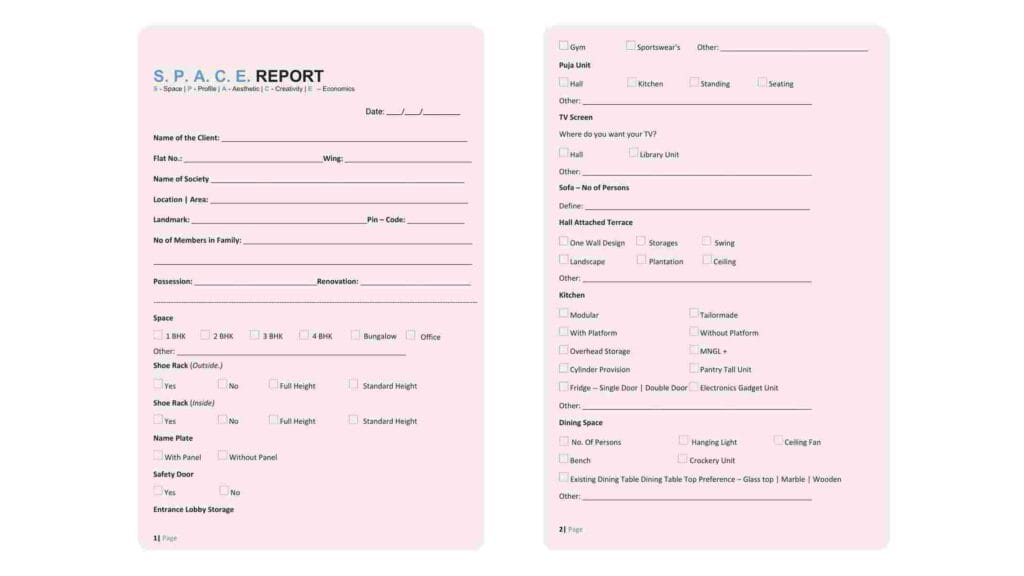
A space report usually covers:
- Measurements and how each area is used
- The purpose of every space
- How many people can use each area comfortably
- How people move around and circulate in the space
- Data on how the space is currently being used
- Suggestions for making the space better
In simple terms, a report reveals what area you have, how it’s being utilized, and how it could be used more effectively.
Why a report Is Essential
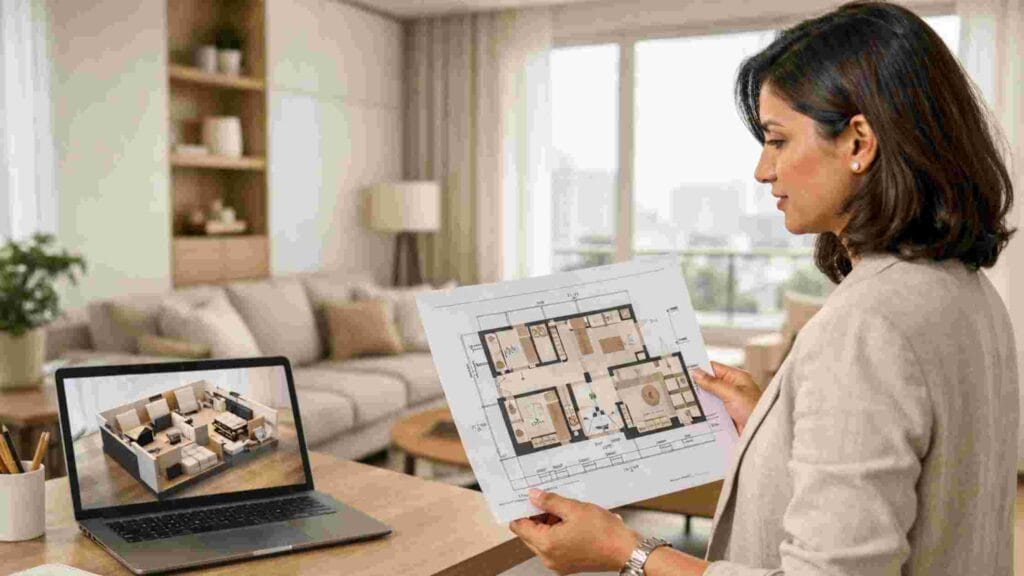
1. Brings Clarity at the Start of the Project
A space report makes a big difference because it clears up any uncertainty right from the beginning. Before anyone starts on drawings, layouts, or 3D designs, it shows exactly what the project needs.
It answers questions like:
- How much space do we really need?
- Which areas should come first?
- Are there spaces that can be flexible or shared?
Getting this clarity early helps everyone stay on the same page and avoids confusion down the line.
2. Improves Space Utilization
Poor use of space is more common than most people think. Many buildings have areas that are barely used, overcrowded, or simply left unused.
A space utilization report, usually part of a space report, looks at how often and how well different spaces are actually being used. It helps identify:
- Unused or low-use areas
- Overloaded spaces
- Opportunities to combine or reorganize functions
By understanding how spaces are actually used, you can plan more efficiently without needing to add extra space.
3. Reduces Design and Construction Costs
Every extra square foot adds to the cost—not only to build, but also to maintain over time. Without a proper space report, projects often end up with spaces they don’t really need, while important functional areas get overlooked.
By clearly defining requirements early:
- Redesigns are reduced
- Construction changes are minimized
- Budget stays under control
This makes the space report a cost-saving tool, not an extra expense.
4. Supports Better Interior Space Planning
Architectural space planning is not just about arranging rooms—it is about creating logical relationships between spaces.
A space report supports architectural space planning by providing:
- Accurate space requirements
- Adjacency needs (which spaces should be near each other)
- Workflow and movement patterns
With this information, architects can design layouts that feel natural, efficient, and user-friendly.
5. Strengthens Interior Planning Decisions
Good architectural planning starts with understanding how people will use the space, not just how it will look.
A space report helps interiors and planners:
- Design for real activities, not assumptions
- Balance aesthetics with functionality
- Plan for future growth or changes
This results in buildings that perform well over time, not just on day one.
Role of a Space Report in Different Types of Projects
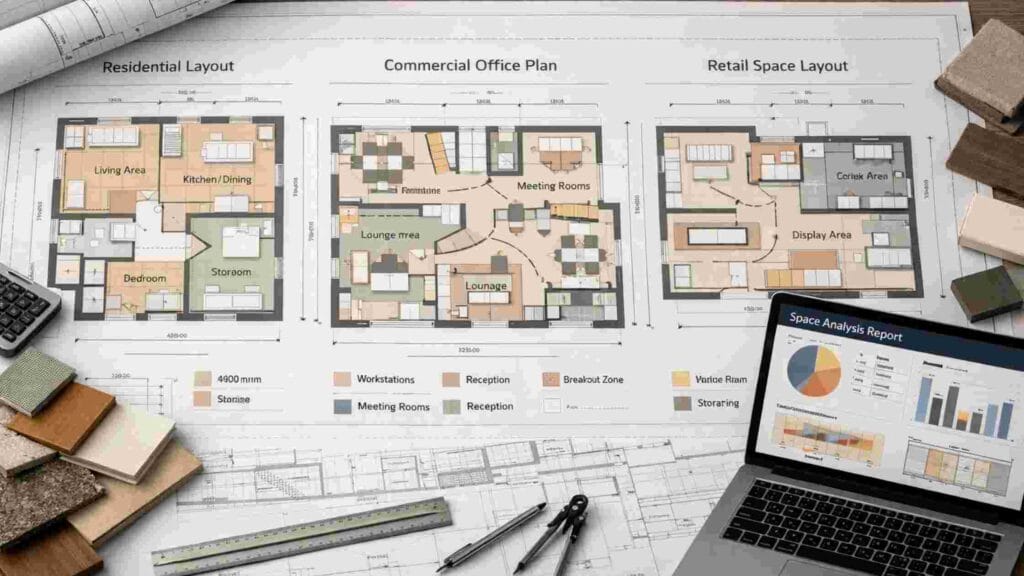
- Office and Commercial Spaces
In offices, space requirements change often due to growth, hybrid work, and evolving work styles. A space report helps:
- Optimize workstation layouts
- Balance collaboration and privacy
- Reduce unused office areas
A space utilization report is especially valuable here to understand how spaces are actually used.
- Residential Projects
In homes, poor space planning can affect daily comfort. A space report ensures:
- Rooms are correctly sized
- Storage is planned properly
- Circulation feels comfortable
This leads to homes that are practical, not just visually appealing.
- Retail and Hospitality
In retail and hospitality projects, space directly impacts customer experience and revenue. A space report helps:
- Improve customer flow
- Optimize display and service areas
- Balance front-of-house and back-of-house spaces
4. Healthcare and Education
In hospitals and schools, space planning affects safety, efficiency, and outcomes. A space report supports:
- Proper zoning
- Safe movement
- Compliance with regulations
How a Space Report Helps in the Long Term
A space report is not useful only during design — it continues to add value even after the project is completed.
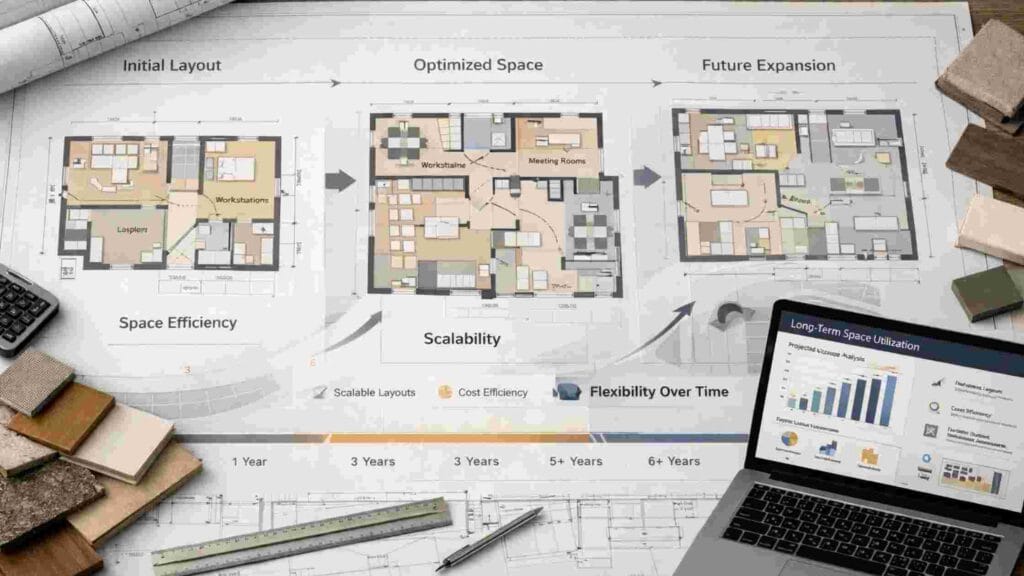
- Supports Future Expansion
Study acts as a reference. It helps decision-makers understand:
- Which spaces can be reconfigured
- Where flexibility exists
- How expansion can be planned smoothly
2. Improves Facility and Space Management
Facility managers use planning data to:
- Track space usage
- Plan maintenance
- Allocate space more effectively
This leads to better control and lower operating costs.
3. Increases Property Value
Well-planned spaces are easier to adapt, lease, or sell. A project backed by strong architectural planning and space analysis remains relevant for years.
Why Skipping a Space Report Is Risky
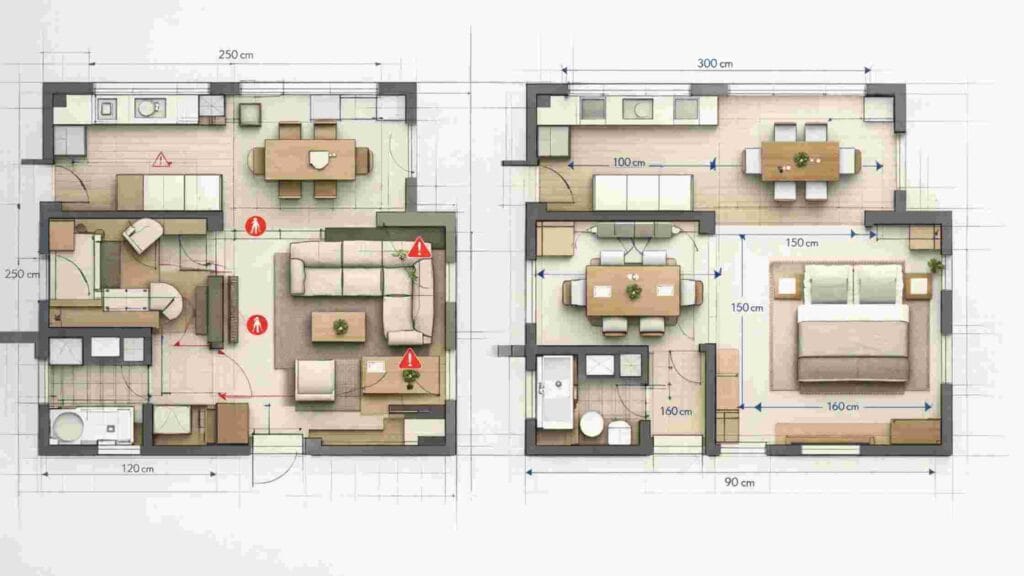
Some people skip the space report to save time. In reality, this often leads to:
- Poor space utilization
- User dissatisfaction
- Costly changes during construction
- Inefficient layouts
A space report reduces risk and increases confidence at every stage of the project.
Conclusion:
A space report is not just a technical document, it is a strategic tool. It connects user needs with design decisions and ensures that space supports function, comfort, and future growth.
When combined with a space utilization report, interior space planning, and thoughtful interior planning, it creates spaces that are efficient, adaptable, and meaningful.
If you want your project to succeed, not just look good but a report should always be the starting point.
FAQ’s
1. What is the main purpose of a space report?
– The main purpose of a space report is to understand how space is used and how it should be planned to meet functional and future needs efficiently.
2. Is a space utilization report different from a space report?
– A space utilization report focuses specifically on how spaces are used, while this report is broader and includes planning, analysis, and recommendations.
3. When should a space report be prepared?
– A space report should be prepared at the very beginning of a project, before design and architectural planning starts.
4. Who benefits from a space report?
– Architects, interior designers, business owners, facility managers, and homeowners all benefit from the clarity and data a space report provides.
5. Can a space report help reduce project costs?
– Yes, by improving space utilization and avoiding design changes, a space report helps control both construction and long-term operational costs.